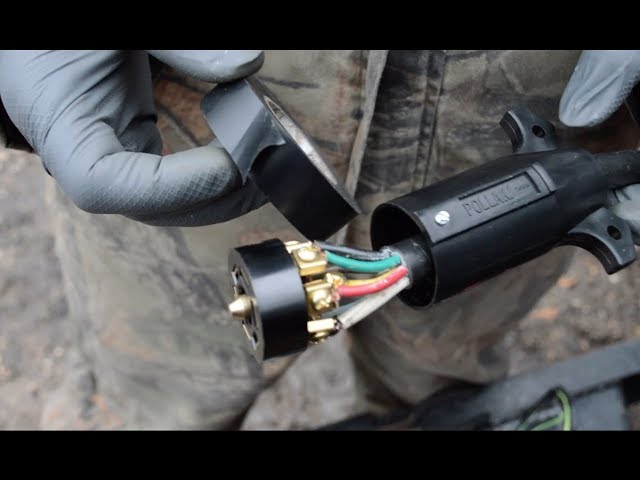
A wiring diagram of a trailer plug, often referred to as a trailer wiring diagram, is a technical drawing that illustrates the electrical connections between a tow vehicle and a trailer. The purpose of the diagram is to provide a visual representation of how the electrical system of the tow vehicle is connected to the electrical system of the trailer, ensuring that the trailer's lights, brakes, and other electrical components function properly.
Trailer wiring diagrams are essential for troubleshooting electrical problems and ensuring the safety of the towing system. By following the diagram, you can identify which wires are responsible for each function and determine if there are any breaks or shorts in the circuit. Proper wiring is crucial for the safe operation of the trailer, as it ensures that the trailer's lights are visible to other drivers, that the brakes are functioning correctly, and that any additional electrical components, such as turn signals or reverse lights, are operating as intended.
Trailer wiring diagrams vary depending on the specific make and model of the tow vehicle and trailer. However, most diagrams include the following basic components:
- Power source (typically the tow vehicle's battery)
- Ground connection
- Tail lights
- Brake lights
- Turn signals
- Reverse lights (if applicable)
When connecting a trailer to a tow vehicle, it is important to match the wiring of the trailer to the wiring of the tow vehicle. This ensures that the trailer's electrical system is properly connected to the tow vehicle's electrical system. If the wiring is not matched correctly, it can lead to electrical problems, such as blown fuses or malfunctioning lights.
Wiring Diagram of Trailer Plug
A wiring diagram of a trailer plug is a technical drawing that illustrates the electrical connections between a tow vehicle and a trailer. It is an essential tool for understanding how the electrical systems of the two vehicles are connected and for troubleshooting any problems that may arise.
- Purpose: To provide a visual representation of the electrical connections between a tow vehicle and a trailer.
- Components: Typically includes the power source, ground connection, tail lights, brake lights, turn signals, and reverse lights.
- Importance: Ensures that the trailer's lights, brakes, and other electrical components function properly.
- Safety: Proper wiring is crucial for the safe operation of the trailer, as it ensures that the trailer's lights are visible to other drivers and that the brakes are functioning correctly.
- Troubleshooting: Wiring diagrams are essential for troubleshooting electrical problems and identifying breaks or shorts in the circuit.
- Matching: It is important to match the wiring of the trailer to the wiring of the tow vehicle to ensure proper connection.
- Variations: Wiring diagrams vary depending on the specific make and model of the tow vehicle and trailer.
In conclusion, a wiring diagram of a trailer plug is an essential tool for understanding the electrical connections between a tow vehicle and a trailer. It is important for ensuring the proper functioning of the trailer's lights, brakes, and other electrical components, as well as for troubleshooting any electrical problems that may arise. By understanding the key aspects of a wiring diagram of a trailer plug, you can ensure the safe and reliable operation of your towing system.
Purpose
A wiring diagram of a trailer plug is a technical drawing that illustrates the electrical connections between a tow vehicle and a trailer. The purpose of the diagram is to provide a visual representation of how the electrical system of the tow vehicle is connected to the electrical system of the trailer, ensuring that the trailer's lights, brakes, and other electrical components function properly.
Without a wiring diagram, it would be difficult to understand how the electrical systems of the two vehicles are connected. This could lead to problems such as blown fuses, malfunctioning lights, or even more serious electrical issues. By providing a visual representation of the electrical connections, a wiring diagram helps to ensure that the trailer's electrical system is properly connected to the tow vehicle's electrical system.
In addition, a wiring diagram can be used to troubleshoot electrical problems. If a trailer's lights are not working, for example, a wiring diagram can help to identify which wires are responsible for the lights and where the problem may be located. This can save time and frustration when trying to troubleshoot electrical problems.
Overall, the purpose of a wiring diagram of a trailer plug is to provide a visual representation of the electrical connections between a tow vehicle and a trailer. This helps to ensure that the trailer's electrical system is properly connected and functioning properly. Wiring diagrams are also essential for troubleshooting electrical problems.
Components
The components of a wiring diagram of a trailer plug are essential for understanding the electrical connections between a tow vehicle and a trailer. The power source, typically the tow vehicle's battery, provides the electrical power for the trailer's lights and other electrical components. The ground connection provides a path for the electrical current to return to the power source, completing the circuit. The tail lights, brake lights, turn signals, and reverse lights are all essential for the safe operation of the trailer, as they allow other drivers to see the trailer and understand its intentions.
Without these components, the trailer's electrical system would not function properly. The power source would not be able to provide electrical power to the lights and other electrical components, the ground connection would not be able to complete the circuit, and the lights would not be able to illuminate. This could lead to serious safety hazards, as other drivers would not be able to see the trailer and could potentially collide with it.
By understanding the components of a wiring diagram of a trailer plug, you can ensure that the trailer's electrical system is properly connected and functioning properly. This will help to ensure the safety of the trailer and other vehicles on the road.
Here is a real-life example of the importance of understanding the components of a wiring diagram of a trailer plug: A few years ago, I was driving a tow vehicle with a trailer attached. I noticed that the trailer's brake lights were not working. I pulled over to the side of the road and checked the wiring diagram of the trailer plug. I quickly identified that the ground wire was loose. I tightened the ground wire and the brake lights started working again. If I had not understood the components of the wiring diagram, I would not have been able to identify the problem and fix it. This could have led to a serious accident if I had been driving in traffic and needed to brake suddenly.
Overall, understanding the components of a wiring diagram of a trailer plug is essential for ensuring the safe operation of a trailer. By understanding the function of each component, you can ensure that the trailer's electrical system is properly connected and functioning properly.
Importance
A wiring diagram of a trailer plug is essential for ensuring that the trailer's lights, brakes, and other electrical components function properly. Without a proper wiring diagram, it would be difficult to understand how the electrical systems of the tow vehicle and the trailer are connected. This could lead to problems such as blown fuses, malfunctioning lights, or even more serious electrical issues.
- Safety: A properly wired trailer is essential for safety on the road. The trailer's lights allow other drivers to see the trailer and understand its intentions. The trailer's brakes are essential for stopping the trailer safely. Without a proper wiring diagram, it would be difficult to ensure that the trailer's lights and brakes are functioning properly, which could lead to accidents.
- Troubleshooting: A wiring diagram can be used to troubleshoot electrical problems with a trailer. If a trailer's lights are not working, for example, a wiring diagram can help to identify which wires are responsible for the lights and where the problem may be located. This can save time and frustration when trying to troubleshoot electrical problems.
- Compliance: In some jurisdictions, it is a legal requirement to have a properly wired trailer. A wiring diagram can help to ensure that the trailer is compliant with all applicable laws and regulations.
Overall, a wiring diagram of a trailer plug is an essential tool for ensuring that the trailer's lights, brakes, and other electrical components function properly. This is important for safety, troubleshooting, and compliance.
Safety
A properly wired trailer is essential for safety on the road. The trailer's lights allow other drivers to see the trailer and understand its intentions. The trailer's brakes are essential for stopping the trailer safely. Without a proper wiring diagram, it would be difficult to ensure that the trailer's lights and brakes are functioning properly, which could lead to accidents.
-
Facet 1: Visibility
Proper wiring ensures that the trailer's lights are visible to other drivers, which is essential for safety. This is especially important at night or in low-visibility conditions. Without properly functioning lights, other drivers may not be able to see the trailer, which could lead to a collision.
-
Facet 2: Braking
Proper wiring ensures that the trailer's brakes are functioning correctly, which is essential for stopping the trailer safely. Without properly functioning brakes, the trailer could jackknife or skid, which could lead to an accident.
-
Facet 3: Compliance
In some jurisdictions, it is a legal requirement to have a properly wired trailer. A wiring diagram can help to ensure that the trailer is compliant with all applicable laws and regulations.
-
Facet 4: Troubleshooting
A wiring diagram can be used to troubleshoot electrical problems with a trailer. If a trailer's lights are not working, for example, a wiring diagram can help to identify which wires are responsible for the lights and where the problem may be located. This can save time and frustration when trying to troubleshoot electrical problems.
Overall, a wiring diagram of a trailer plug is an essential tool for ensuring the safe operation of a trailer. By understanding the importance of proper wiring and the role that a wiring diagram plays in ensuring that the trailer's lights and brakes are functioning properly, you can help to prevent accidents and keep yourself and others safe on the road.
Troubleshooting
Wiring diagrams are essential for troubleshooting electrical problems and identifying breaks or shorts in the circuit. This is especially important for a trailer plug, as a faulty connection can lead to a variety of problems, including:
- No lights
- Malfunctioning brakes
- Intermittent power
-
Facet 1: Identifying Breaks or Shorts
A wiring diagram can help you identify breaks or shorts in the circuit by providing a visual representation of the connections. This can be especially helpful if the problem is intermittent, as you can use the diagram to trace the circuit and identify the point at which the problem is occurring.
-
Facet 2: Repairing the Problem
Once you have identified the source of the problem, you can use the wiring diagram to help you repair it. The diagram will show you how the circuit is supposed to be connected, so you can identify which wires need to be repaired or replaced.
-
Facet 3: Preventing Future Problems
By understanding how the circuit is supposed to be connected, you can help prevent future problems from occurring. For example, if you know that a certain wire is prone to breaking, you can take steps to protect it from damage.
Overall, wiring diagrams are an essential tool for troubleshooting electrical problems and identifying breaks or shorts in the circuit. By understanding how the circuit is supposed to be connected, you can quickly and easily identify and repair problems, and prevent future problems from occurring.
Matching
When connecting a trailer to a tow vehicle, it is important to match the wiring of the trailer to the wiring of the tow vehicle to ensure proper connection. This means that the wires on the trailer must be connected to the corresponding wires on the tow vehicle. If the wires are not matched correctly, it can lead to electrical problems, such as blown fuses or malfunctioning lights.
In the context of a wiring diagram of a trailer plug, the importance of matching the wiring cannot be overstated. A wiring diagram is a visual representation of the electrical connections between the tow vehicle and the trailer. It shows which wires on the tow vehicle are connected to which wires on the trailer. By following the wiring diagram, you can ensure that the wires are matched correctly and that the electrical system of the trailer is functioning properly.
There are numerous real-life examples of the importance of matching the wiring of the trailer to the wiring of the tow vehicle. For instance, if the ground wire on the trailer is not connected to the ground wire on the tow vehicle, the trailer's lights may not work. This could lead to a dangerous situation, as other drivers may not be able to see the trailer at night.
Another example is if the brake lights on the trailer are not connected to the brake lights on the tow vehicle, the trailer's brakes may not work properly. This could lead to an accident, as the driver of the tow vehicle may not be able to stop the trailer in time.
By understanding the importance of matching the wiring of the trailer to the wiring of the tow vehicle, and by using a wiring diagram of a trailer plug, you can help to ensure the safe operation of your trailer.
Variations
Wiring diagrams of trailer plugs vary depending on the specific make and model of the tow vehicle and trailer. This is because different tow vehicles and trailers have different electrical systems. The wiring diagram for a specific trailer plug will show how the electrical system of the tow vehicle is connected to the electrical system of the trailer. It is important to use the correct wiring diagram for the specific tow vehicle and trailer combination to ensure that the electrical system of the trailer is functioning properly.
-
Facet 1: Understanding the Differences
The variations in wiring diagrams of trailer plugs are due to the different electrical systems used in different tow vehicles and trailers. For example, some tow vehicles use a multiplex electrical system, while others use a traditional electrical system. Multiplex electrical systems use a single wire to carry multiple signals, while traditional electrical systems use a separate wire for each signal. The wiring diagram for a trailer plug must be compatible with the electrical system of the tow vehicle and the trailer.
-
Facet 2: Matching the Wiring Diagram to the Tow Vehicle and Trailer
It is important to use the correct wiring diagram for the specific tow vehicle and trailer combination to ensure that the electrical system of the trailer is functioning properly. Using the wrong wiring diagram can lead to electrical problems, such as blown fuses or malfunctioning lights. In some cases, using the wrong wiring diagram can even damage the electrical system of the tow vehicle or the trailer.
-
Facet 3: Real-Life Examples
There are numerous real-life examples of the importance of using the correct wiring diagram for a trailer plug. For instance, if the ground wire on the trailer is not connected to the ground wire on the tow vehicle, the trailer's lights may not work. This could lead to a dangerous situation, as other drivers may not be able to see the trailer at night.
-
Facet 4: Safety Implications
Using the correct wiring diagram for a trailer plug is essential for safety. A properly wired trailer is essential for safe operation on the road. The trailer's lights allow other drivers to see the trailer and understand its intentions. The trailer's brakes are essential for stopping the trailer safely. Using the wrong wiring diagram can lead to electrical problems that can compromise the safety of the trailer and other vehicles on the road.
Overall, it is important to understand that wiring diagrams of trailer plugs vary depending on the specific make and model of the tow vehicle and trailer. Using the correct wiring diagram is essential for ensuring that the electrical system of the trailer is functioning properly and for safety on the road.
FAQs
This section provides answers to frequently asked questions about wiring diagrams of trailer plugs, offering valuable insights and practical guidance to ensure a comprehensive understanding of this essential component for safe and efficient trailer operation.
Question 1: What is the purpose of a wiring diagram of a trailer plug?A wiring diagram of a trailer plug serves as a visual representation of the electrical connections between a tow vehicle and a trailer. It illustrates how the electrical system of the tow vehicle is connected to the electrical system of the trailer, ensuring that the trailer's lights, brakes, and other electrical components function properly.
Question 2: Why is it important to have a wiring diagram of a trailer plug?Having a wiring diagram of a trailer plug is crucial for several reasons. It enables proper troubleshooting of electrical problems, facilitating the identification of breaks or shorts in the circuit. Additionally, it aids in ensuring that the trailer's electrical system is properly connected to the tow vehicle's electrical system, enhancing safety and preventing malfunctions.
Question 3: What are the main components typically included in a wiring diagram of a trailer plug?Generally, a wiring diagram of a trailer plug encompasses the following key components: the power source (typically the tow vehicle's battery), ground connection, tail lights, brake lights, turn signals, and reverse lights. These components collectively ensure the proper functioning of the trailer's electrical system.
Question 4: How can I match the wiring of my trailer to the wiring of my tow vehicle using a wiring diagram?Matching the wiring of your trailer to the wiring of your tow vehicle using a wiring diagram is crucial for proper connection and ensuring that the trailer's electrical system functions correctly. By carefully following the wiring diagram, you can identify which wires on the trailer correspond to which wires on the tow vehicle, enabling you to connect them accordingly.
Question 5: Why is it important to use the correct wiring diagram for my specific tow vehicle and trailer combination?Using the correct wiring diagram for your specific tow vehicle and trailer combination is essential for compatibility and proper electrical system operation. Different tow vehicles and trailers have different electrical system configurations, and using an incorrect wiring diagram can lead to electrical problems, malfunctions, or even damage to the electrical system.
Question 6: Where can I find the wiring diagram for my specific tow vehicle and trailer combination?The wiring diagram for your specific tow vehicle and trailer combination can typically be found in the owner's manual for your tow vehicle or trailer. Additionally, you can often find wiring diagrams on the websites of the manufacturers of your tow vehicle and trailer.
Summary: In summary, wiring diagrams of trailer plugs play a critical role in ensuring the proper functioning and safety of trailers by providing a visual representation of electrical connections. Understanding the purpose, importance, and components of a wiring diagram empowers you to troubleshoot electrical problems, match wiring correctly, and enhance the overall reliability of your trailer's electrical system.
Transition: This comprehensive guide to wiring diagrams of trailer plugs concludes here. For further in-depth exploration of trailer electrical systems and related topics, we encourage you to delve into the additional resources and articles available on our website.
Tips for Wiring Diagrams of Trailer Plugs
Wiring diagrams of trailer plugs play a crucial role in ensuring the proper functioning and safety of trailers by providing a visual representation of electrical connections. Understanding the purpose, importance, and components of a wiring diagram empowers you to troubleshoot electrical problems, match wiring correctly, and enhance the overall reliability of your trailer's electrical system.
Tip 1: Thoroughly Understand the Wiring DiagramBefore attempting to connect the trailer's electrical system to the tow vehicle, take the time to thoroughly study and understand the wiring diagram. Familiarize yourself with the symbols, color-coding, and layout of the diagram to ensure accurate interpretation and implementation.Tip 2: Use the Correct Wiring Diagram
Different tow vehicles and trailers have different electrical system configurations, necessitating the use of the correct wiring diagram specifically designed for your specific combination. Using an incorrect diagram can lead to electrical problems, malfunctions, or even damage to the electrical system.Tip 3: Inspect and Prepare the Wiring
Prior to connecting the trailer's electrical system, carefully inspect the wiring for any signs of damage, corrosion, or loose connections. Clean and repair any damaged wiring as necessary to ensure proper electrical flow and prevent potential issues.Tip 4: Match the Wiring Correctly
When connecting the trailer's wiring to the tow vehicle, meticulously match the wires based on their corresponding colors and functions as per the wiring diagram. Incorrect matching can result in malfunctioning lights, brakes, or other electrical components.Tip 5: Secure the Connections
Once the wires are matched and connected, use electrical tape, heat shrink tubing, or other appropriate methods to secure the connections and protect them from moisture and vibration. Loose connections can lead to intermittent electrical problems or complete failure.Tip 6: Test the Electrical System
After connecting the trailer's electrical system to the tow vehicle, thoroughly test all the lights, brakes, and other electrical components to ensure they are functioning properly. This step helps identify and resolve any potential issues before operating the trailer on the road.Tip 7: Keep a Copy of the Wiring Diagram
Maintain a copy of the wiring diagram in an easily accessible location within the trailer or tow vehicle. This will serve as a valuable reference for troubleshooting any future electrical problems or when making modifications to the electrical system.Tip 8: Seek Professional Assistance if Needed
If you encounter any difficulties or uncertainties while working with the wiring diagram or trailer's electrical system, do not hesitate to seek assistance from a qualified electrician or automotive technician. Their expertise can help ensure the safety and proper functioning of your trailer's electrical system.
By following these tips, you can effectively utilize wiring diagrams of trailer plugs to maintain a reliable and safe electrical system for your trailer. Remember, proper wiring is essential for ensuring the trailer's lights, brakes, and other electrical components function correctly, enhancing visibility, safety, and overall peace of mind while towing.
As you continue to operate and maintain your trailer, we encourage you to delve into additional resources and articles available on our website to further enhance your knowledge and skills in this area. By staying informed and adopting best practices, you can contribute to the longevity and reliability of your trailer's electrical system.
Conclusion
Throughout this comprehensive exploration, the wiring diagram of a trailer plug has been thoroughly examined, revealing its significance in ensuring the proper functioning and safety of trailers. By providing a visual representation of electrical connections between a tow vehicle and a trailer, the wiring diagram empowers individuals to understand, troubleshoot, and maintain the trailer's electrical system effectively.
The key takeaways from this exploration emphasize the importance of using the correct wiring diagram specifically designed for the specific tow vehicle and trailer combination. Careful matching of wires based on their corresponding colors and functions, as well as secure connections and proper insulation, are crucial for preventing electrical problems and malfunctions. Regular inspection and testing of the electrical system, along with maintaining a copy of the wiring diagram for future reference, contribute to the longevity and reliability of the trailer's electrical system.
As technology continues to advance and new developments emerge in the realm of trailer electrical systems, staying informed and embracing best practices will ensure that trailers remain safe and reliable on the road. By adhering to the principles outlined in this exploration, individuals can confidently navigate the complexities of trailer electrical systems, contributing to the overall safety and efficiency of their towing experience.
Youtube Video: